Khor el Morob, Sudan

21 49 N, 36 51 E

There is a weather window now, and today we could have bombed 150 miles north to Sataya Reef, leaving this afternoon and arriving in about two days. The winds would have been light for the first 30 hours, and then a bit stiffer the rest. Light winds are all we want here, because they are always from the north, which is where we are going.

But we decided to stay. Sudan is, in some ways, the last of its kind on our trip. The last of the Third World, out of the way, not-so-much commercialism places we’ll be in during our circumnavigation. Sure parts of Egypt will be a bit like that, but not quite like this. And after that, it’ll be places like Israel and Greece and Turkey and Italy, etc. And then home, albeit not right away. Those will all be places to see, don’t get us wrong, and they are hardly London or New York, but they do have McDonalds and such, and leaving here does feel like we’re going through another door, coming back into the Western World. So we’re melancholic about leaving, and not in a hurry to do so.

It feels like we’ve been sailing under pressure for a long while, making sure we make weather windows before they close. So we want to make sure that we see these places, and not regret later rushing through the Red Sea. Not too slowly, though, as July can get hot here.

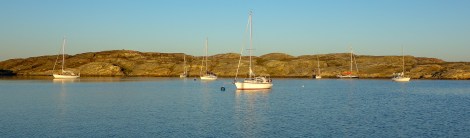
We went for a swim and a walk today. The snorkeling was good, and unlike some of the coral reefs that we’ve seen further south in the Red Sea, this one is still alive. Then we went for a walk around our arm of Khor el Marob. (What the heck are these “khor” and “marsa” things by the way? Along the Sudanese coast, and in fact along most of the Red Sea, the desert reaches all the way to the edge of the water. Typically, there is then a reef that extends outward, sometimes a few feet and sometimes a kilometer or two. At intervals, one finds indentations in the land that offer varying amounts of protection from the wind and sea. Our reference materials say that a “marsa” is a “natural” bay, sometimes protected by a headland or reef jutting out into the sea. The term connotes a more open waterway. A “sharm,” on the other hand, is supposed to be a narrow, deep, and typically winding indention, often pushing several kilometers inland. Both a marsa and a sharm are more correctly called a “khor,” in turn, if the indentation in the land is an extension of a valley and associated estuary coming from the hills. The charts and the guide books, however, seem to use these terms interchangeably and confusingly, and many places are called “marsas” that, according to these definitions, should be called sharms and khors. Thus, our Navionics electronic chart calls this place “Marsa Mar’Ob,” our British Admiralty Chart calls it “Khor el Mar’ob,” and our piot drops the apostrophe, calling it “Khor el Marob.”)

Whichever you choose, they are fun places to enter and anchor in, once you’ve gotten over the first-time fright of trying to get in to one. From the sea, the entrances are hard to make out, and often all you can see is the low desert plain leading up to the water, sometimes ending abruptly in a low wall at the water’s edge, and other times sloping down more gradually to a beach. In either case, a reef then typically slinks away from the shore, sliding under the water and out to meet your boat.

We can typically start to make out an opening about a mile away. When we get within half a mile, Sima leaves the cockpit, moves to the mast, steps into the bosun’s chair like a pair of shorts, takes the main halyard from the mast, and fastens it to the front of the chair. Loaded with a pair of binoculars, the hand-held VHF, a bottle of water, and polarized sunglasses, up the mast she goes! Paul cranks the main sheet winch until she’s up to the spreaders. The difference in height from the deck enables us to see more clearly the twists of the khors and the associated reefs. She doesn’t like the first part of it, before we enter the khor and when we’re still in the surf, as any swaying on deck is magnified considerably as you go up the mast. (“Ouch. Quit it. Ouch. Quit it.” Etc.)

For Khor el Marob, the entrance was relatively easy to pick up, and we eased in. As we entered, it narrowed, and then a branch led off to port. That branch looked narrower still.

The better anchorage was supposed to be down the main arm, which started straight ahead and then twisted and turned in the dunes to an end about three kilometers away. According to the pilot guide, we were supposed to hunt for a spot near the center of the channel where the water shallowed to 15 feet. We looked and looked, but could find nothing less than about 60 feet, unless we got uncomfortably close to the reefs on each side. We did circles and zigzags and looked some more, the two of us sharing observations, Sima aloft and Paul at the ship’s radio at the helm.

(We did pause to snap some photos of a fisherman and what looked like his sons, fishing with a net on a bank. The net set, they ran back and forth in the shallow water, trying to scare the fish into the net. As we fished around for an anchorage, they paid us no attention whatsoever.

We couldn’t find a good spot. The sun was getting lower, which, because of its glare, was making it increasingly harder for Sima to pick out reefs and isolated coral heads, which can sometimes be located where you don’t like them to be.

We decided to try the narrower arm we’d seen just inside the entrance, though our Red Sea Pilot Guide gave little information about it. (The pilot guide is quite good in many ways, but would be improved if the authors more willingly noted when they did not have first-hand knowledge about a place. Instead, it sometimes uses laconic language that suggests that they know about a place, when maybe they really don’t. As to this side alley, it suggests that “one could try Khor Tibut [our narrow arm], but the channel is narrow and the swinging room is limited.”)

We proceeded down, and the channel did in fact narrow, but continued to be too deep to anchor. We were moving westish, so Sima was having a particularly difficult time seeing on one side. We slowed down to a crawl, nosing along at less than two knots. It was too narrow, and Paul began to turn the boat around, giving up, as the pilot guide’s sketches intimated that this was the end of the road, and that there was a shallow underwater reef immediately ahead all the way to the end of the arm, still a kilometer or so distant.

“You turning back?” Sima asked on the radio?

“You can’t see, can you?” asked Paul. “Maybe try a little bit further,” Sima suggested. “Go slow.” So we continued on, into no-mans land, or, according to our guide, onto a reef.

But the water beneath us didn’t narrow and end precipitously in a reef, but instead opened up more generously with a sand bottom, and also shallowed. It was just 25 feet deep in the middle, a good depth in which to anchor. Paul marked the spot on the chartplotter, and then began to do slow, increasingly growing circles around the spot to ensure that there was good depth if the boat swung. There was.

Paul eased off the throttle, and hustled forward to let Sima down from the spreaders, where she performed her typical glad-I’m-down-from-there ritual: her feet hit the deck, she quickly stepped out of the bosun’s chair, fell to her knees, and bent to kiss the deck, happy to be back on solid ground. Well, you know what we mean.

We dropped anchor at 21 49 389 N, 036 51 996 E. This seems to be a perfect anchorage, and much better than the pilot suggested. And although not marked on any chart that we have, maybe we’re in Khor Tibut, and not Khor el Marob. There’s been no one to ask.

Now, here for our second day, and with no wind, we can see far in the distance, to big mountains inland. The colors are surreal — different shades of yellows and purples and browns. The mountains in the distance give way to smaller foothills as they get closer, those giving way to rolling plains, dry and scrub-brushy, before they reach us, the colors becoming more distinct as they approach.

As we swam today, a group (herd? flock? murder?!) of camels appeared trooping slowly across a distant dune, dark-brown silhouetted against a pale sky.

Then we saw a family that had come to picnic under a small overhang in a dune. So we approached. We met Bahshir and his wife, three kids, and mother-in-law. (Mother-in-law? Maybe. We don’t know the word for that in Arabic, so we’re not so sure.) The two women were veiled, in keeping with their Muslim religion, but also each bore three, dark blue vertical stripes tattooed on each of their cheeks, in keeping, we take it, with their African tribal traditions. (We’ve seen such facial markings before. In Suakin, some of the men similarly had three vertical stripes on each cheek, with three more going horizontally across their foreheads. Those marks are not tattooed into the skin, however, but are cut in deeply with knives when the men were boys of ten. By the looks of the scars, we could tell that the cuts were deep when made.)

We gave Bashir’s children gifts of candy, a t-shirt, and some old address labels with American flags. (The latter had been sent to Paul’s pop by an American veteran’s group. Dad, if you get some mail from Sudan, you’ll understand. The family was not literate, however, so you should be OK.) All the gifts were a big hit. The kids started peeling the stickers off and putting them on everything in sight, including sandals, picnic dishes, and body parts.

With hand gestures and our ten words of Arabic, we told them that we sought to go to a nearby town, Fuwaken, to get some vegetables. Tomorrow, Bashir will take us.

At the end of the day, two men appeared on a nearby dune. They whistled and called toward the boat. One wore a sweat suit and the other NBA-style baggy shorts, which is, somewhat confusingly, typical dress for the military around here. We ignored them, though, because the sun was fading and because we weren’t really sure of their identity, and the distance was a bit too far to communicate meaningfully. We haven’t been using the dinghy, but instead swimming when we go to shore, and we didn’t feel like going back in the water either. Eventually, they turned and started to walk away. Then they broke into a run. Runners?! Runners can be trusted! thought Paul. He yelled to them. They stopped, turned, looked at the boat, and then turned away again, and went back to their jog. Paul watched them for five minutes until they disappeared over a dune, into the scrub brush.

Now it is late night, and it is so quiet that the only noise that can heard are fish jumping. (Sounds romantic, but it’s actually dinner time, and some are no doubt making their final splosh.) The water is still enough to make out the constellation Scorpio in the water’s reflection. Paul falls asleep on deck, watching shooting stars, and Sima on the couch, curled up comfortably.

Paul

Posted in Uncategorized | Leave a comment

Marsa Shin’Ab, Sudan

21 20 N, 37 00 E

Boy, it’s dusty here. And dry. A minute after you finish your cereal, slurrrpppprhphhh, gone is the moisture, sucked into the air, and the thin layer of milk has hardened to a crust. (It doesn’t really make that noise. That’s just for effect.) We are comfortable, and don’t sweat, because any moisture that dares make its appearance on our skin is quickly vacuumed up in much the same way. (Same sound.)

We clean off the solar panels, which get dust covered, and then a couple of hours later it’s as if we didn’t touch them. And the sand/dust makes the mountains in the background disappear. When it’s not windy, we get a beautiful sunset, but when it does get stirred up, the sun just gets whiter and duller and then fades to nothing about 15 degrees above the horizon.

The winds look like they are moderating a little bit. But inertia sets in — you know, bodies in motion tend to stay in motion, etc. When we’re at sea, we want to continue charging up the Red Sea, putting miles under the belt. When we’re at anchor though, and it’s comfortable and we do small tasks and listen to books on tape and watch movies and Sima takes most of the later afternoon making a wonderful dinner, it’s tough for both of us to think about going to sea again. Especially if the wind is blowing at our anchorage, and we can imagine what the seas will be like offshore.

But we’ll go off today. How far we go depends upon how it is out there. We have our eyes set on dolphin reef, 214 miles away, which is an eternity in these seas, so we’ll see. We may stop at Elba Reef, which is just 40 miles away. We’ll leave today, May 30, at about 4 p.m. local, 13:00 UTC. Dolphin Reef would be three days, or maybe four, and Elba would be a day.

All is well aboard.

Posted in Uncategorized | Leave a comment

Marsa Shin’ab, Sudan

21 21 N, 37 00 E

Paul’s sister Joanne would love it here. And we wish she were here to help us figure out what we are seeing.

There aren’t many shore birds, but there are some scattered along a little marshy, sandy part of the cove in which we’ve anchored, all within forty yards of each other, and about 200 yards from the boat. One looks like an egret, with an all white body, straight legs and straight neck. It walks slowly in the shallow water, then, suddenly, takes a dozen frenetic steps, stops, freezes, head cocked like a loaded pistol, and stares fixedly into the water. An instant later it stabs into the shallows, pauses, and walks away slowly to repeat the process.

There is another white wading bird, which looked liked the first, at first, but upon closer examination has a more question-mark shaped head, and black legs where the egret was yellowish sand colored. Heron? We take a picture, and zoom in. It’s got a big long custard-colored spoon bill! That’s no heron!

And another bird that is of this same shape, except perhaps a little plumper, with no spoon bill, and is dark black, with a hint of blue or purple. A blue heron perhaps?

Two more birds fly by. Are they the herons we just saw ashore? The first one is jet black, with a long pointy beak, it’s legs trailing behind, and its neck folded up tight in flying formation. We turn the binoculars to a bird just behind it. It’s the exact same bid, except this one is all white. Is the one in front a juvenile? The one in back has its mouth agape, and is screeching at the one in front, apparently driving him away. The black bird does go away, and his white twin returns to wading at the spit.

And then some runners, along the mud flats, in back of the spit. Smaller, maybe 18 inches off the ground, but with long, white stilted legs. They are bright white, but with feet and a beak that look like they have been dipped in flat black paint, and then a black splotch/stripe on their back, and a black line around their sides, running horizontally. When they fly, they are white-winged with a black trim at the back of their wings. Cool looking bird with a lot going on for a wader. They scamper about, much like the piping plovers we see on MA’s North Shore. Further away, in the drier part of the marsh, are some really, really small runners, about the size of sparrows. They scurry too and fro in groups, herd-like, going hither and dither in a wave, like a school of fish. They are too far away to be able to make out their coloring, but appear grayish. Or maybe brown.

Another small bird flies about the cove, getting it’s food a different way. It is also white, with black wing tips, but lighter and faster and more narrowly built, like a tern or petral. It flutters up about the small wavelets, and then tucks up like a dive bomber, slicing into the water. It surfaces, gets back into the air with a squawk, climbs to about 40 feet, and does it again.

Back on shore, there are also some black crows — what are they doing here? And then down the end of the this little spit sit what look like ducks, black and white, although from the distance of the boat we can’t tell which parts are white and which black. They could be the sea birds that we see flying around skimming and diving for fish off shore. They are the right color. They aren’t doing much now, just acting bored.

There, another weirdo. In profile, no lie, it looks like a chicken, with an upturned tail. It has an off-white body, but with grayish wings – making it look a bit like a pair of two-toned shoes. And it finishes its look off with a black wig that trails off the back of it’s head, with a chicken-yellow beak protruding out the front. Its head looks more like a wood pecker than a shore bird.

And then, WHOA! What is that?! From back a little ways inland, something takes off that is gigantic. Huge. Prehistoricish. As he passes over the other birds on beach, many of them scatter. If the waders were the size of fighter jets and helicopters, here comes the B-1 bomber. It has enormous wings, the leading half dirty white and the back half and tips black. Are they squarish or pointy? Both! With five or so feathers spread off at the end of its wings, they are tucked in to make the wing pointy or spread out, like fingers, to make it square, changing back and forth as it flies. Its feet are not tucked in when flying, but instead trail lonnnggg behind it, burnt red and webbish. Its front end is all business, with a long pointy beak and a narrow grayish colored head followed by a dirty white colored neck. The attitude of its slightly upward-pointing head and downward pointing beak could have been the genesis of the Concorde’s design. It comes all the way over by the boat, calling once as it goes by. Don’t know what he is, and no ornithologists we (you already knew that?!), but we’d be willing to bet that his design hasn’t changed much for many millennia.

We are in Marsa Shin’ab. It is dry and desert like, with sandy hills nearby, and larger mountains further away. In between, maybe eight miles or so off, there is a coast road. We can’t see it, by every five minutes or so we see a truck moving along, wavy and mirage-like in the heat. Maybe coming from Egypt? Delivering aid to Darfur? Supplies to Khartoum?

Although our view stretches for many miles, we can count on one hand the number of green things we see. There is one very big tree very nearby, however. It sits on a little island that pushes its way out into this bay, more reeds and mud than actual earth. That tree must have figured out a way to live on salt water because there is no way that it can be getting pure fresh water where it grows. But whatever it does drink, it’s done a good job, because in a bleak area otherwise devoid of plant life, it has spread an umbrella of green against a washed-out landscape.

It’s very hot still, but comfortable at night and in the shade.

We have just pulled in and dropped anchor, after winding four miles up this “marsa” to get to the little bay in which we now sit. There is no one around. No buildings, fishing boats, dive boats or anything else. We did see a handful of fisherman at the entrance of the marsa, four miles away, but nothing since. The fishermen seemed to be doing well, by the way, as we saw one white-robed fellow pull in a fish as big as his arm as we passed. We would like to say that they are “nomadic” fishermen, as that description has been applied to some of those who fish around here. But they were driving a shiny SUV and pickup truck. Maybe they’ve increased their range? (Hah! Looked back at our guide book — it says that the nomadic fishermen drive trucks! For real? It takes a bit of the romance out of our conception of African nomads, and the definition seems a bit over inclusive.)

We’ll go for a snorkel now (Sima saw two rays in the shallows when she was spotting from aloft on the way in) (come help us Joanne!), maybe go for a hike, take a look at the weather, and maybe watch a movie later.

The Red Sea has been nice to us so far.

Posted in Uncategorized | Leave a comment

Suakin, Sudan

19 06 N, 37 20 E

We’re in Suakin, in Sudan on the banks of the Red Sea. So much is happening every day that it has been difficult to keep up with postings.

Here’s what we’ve been up to:

1. We visited Sana’a, an ancient but very much living city in Northern Yemen. We wandered stone streets with 1000 year-old buildings, some looking great for their age while others were little more than piles of rubble. We visited the market where we watched tradesmen working with kilns, hammers, tongs, and anvils to pound out nails from scrap pieces of metal, and saw merchants selling spices, herbs, and grains from gigantic baskets. Names like “miller, smith, sawyer, and cooper” have real meaning here. Townsfolk streamed by as we sat and watched, women in black with nothing else visible but dark eyes, sometimes stealing glances to search you out as you them. And men, some holding hands, as is there wont, dressed in earth-colored skirts and turbans, white shirts, and the obligatory scabbard in their belts, their cheeks more often than not full of qat.

2. We did the final run through pirate alley, leaving the Gulf of Aden for the Red Sea, with three armed Yemeni Coast Guard personnel aboard, provided courtesy of a Yemeni friend of a friend of a friend from back home, Bob Delferro. The guards were a treat, both in scaring away two questionable approaches, and because they were great guys. We taught them sailing and fishing and they taught us about Yemen and waved automatic weapons around when boats got too close. Good photos of a machine gun mounted on LEANDER’s foredeck, or, more appropriately, forecastle. We’ll do a note about that trip.

3. We spent a couple of days in Hudaydah Yemen, again with an armed guard at our elbow. We had no problems there either. We drove by a huge outdoor qat market at night with hundreds of men buying, selling, and chewing qat on elevated, lit platforms. A sight to see.

4. We have now made it to Suakin, which is yet another magical place. It is an ancient trading post, but the old town has mostly crumbled into the sea, and is deserted. It looks like Atlantis or maybe a European city after a WW II bombing run. Beautiful classical buildings are 1/2 standing, with archways and columns holding up nothing but air and stairways going up three stories to floors that are long gone. We wander the city by ourselves, with no one else in sight. We imagine that the ruins of ancient Greece or Rome might have looked similarly fresh and untouched 100 years ago before they became a theme park.

It’s first light now here in Suakin. Eagles float around our mast and, alighting, make a racket. That woke us up this morning, actually.

The sun is shining off the remains of the ruined city while across a causeway behind us, the town – the new town – is coming to life. Mixed with the clatter and clinking of the day’s work beginning and human voices, one hears donkeys braying, the preferred beast of burden here. A bus pulls away on the road to Port Sudan. On the other side of a causeway, we see a group of men bathing, chanting a song together as they do, then stopping, together, when the sun makes its appearance through the dusty desert haze.

We wish we could share the pictures already! Of donkeys pulling water tanks down the main street, of colorful fishing boats hauled up along a bleached white wall, of a fisherman painting one of those boats with a bucket of red paint and a small rag, his entire hand, blood red from the paint, or of a pale white sun dissolving into a sand storm that had already swallowed the mountains it was trying to set behind. And the ruins – we just couldn’t stop taking the same pictures of them, in morning, at Noon, at dusk.

Northern Sudan is in Islamic Africa, but just barely. When we started to greet folks here with the traditional Islamic hello, “Salaam al Haykum” (“I greet you in the name of God.”), which we’ve been using in other Islamic countries that we’ve visited, we get back “Merhaba” instead, the more secular “hello” used in Turkey.

Each day we go and see John, a baker. He works inside a dark building next to a brick oven all day, but the heat doesn’t seem to bother him. For some reason, during our visits, we don’t notice the heat either. Maybe we’ve gotten used to the oven outside too.

From John we purchase ten sandwich-sized fluffy pitas for fifty cents. We later stop by a school to drop off some scrap paper, and are followed throughout the dusty courtyard by fifty screaming school girls who must think we’re the Beatles. And if we stop to talk to someone, we are quickly surrounded by many others curious to meet the outsiders. We don’t mind. We’re as curious as they are. We walk by a bus stopped at the gas station, full of brightly veiled women, rhythmically moaning and clucking a high-pitched lament in unison on their way to a funeral.

We are reef hopping now, continuing up the Red Sea. We are off to sea again today, getting an early start. In the morning, there are no winds, but in the afternoon they blow 15-25 knots on the nose. So we are going in short hops, and feel no more time pressure. Life has slowed down a little bit.

Off we go. All is good aboard Leander.

Posted in Uncategorized | Leave a comment

Aden, Yemen

12 47 N, 44 59 E

An on-line travel guide to Yemen starts with this: “WARNING: Travel to Yemen at this time is not recommended because of the very high threat of terrorist attacks, kidnappings, tribal violence, and general lawlessness.”

The guide continues that Yemen “is a tourist’s country” that “holds so many treasures that appeal to any open-minded visitor. The sights are amazing, the people are friendly, their culture is unique, and their food is tasty.”

Of course, these two descriptions are not mutually exclusive and we’ve found a little bit of both here. The people in this ancient home to the Queen of Sheba are friendly, the sights amazing, and the food scrumptious. The locals have had some time to practice, as this is one of the oldest inhabited places on earth.

But al-Qaeda is also here. Tourists visiting the northern part of the country were targeted and killed as recently as 2009. And two minor explosions that occurred when we were in Aden (which we’ll describe in a second blog) will prolong the image that the country suffers from a “general lawlessness.”

But we get ahead of ourselves.

Entering Aden Harbor was dramatic. The buildings of the city are nestled among a series of jagged, dry, tan-colored hills that rise close to the sea, the center of the city itself being a dormant volcano, aptly known as “Crater.” As we sailed around the headland and moved toward the city, a huge Yemeni flag – red, white, and black in horizontal bands, trimmed in gold- came into view, waving in the wind atop a flagpole that was sky-scraper tall, Aden’s hills smoldering in the background.

We called Aden Port Control on the VHF radio. We’ve spoken to port officials throughout the world now, and they tend to fit within a certain mold – a bit like airplane pilots – nothing but the facts, ma’am, in calm and unexcitable voices, exuding confidence and control. Aden’s Port Control didn’t fit this mold.

“Welcome, welcome to Aden!” the official bubbled. “We are so happy to have you here! We hope that you have had a pleasant passage.” We provided our vitals in response to his queries.

And then, “Are there any questions that you might have of me?”

Well, actually, there were. We asked some questions about the anchorage and clearing in, which were readily answered.

“Anything else? Is there anything I can do for you? Please, it is no trouble.”

We couldn’t think of anything else.

“Well, then, welcome, welcome! If you think of anything else, please just call. And please come visit me!”

Oh, are we obligated to come to Port Control?

“No, no! I would just like to meet you!”

So, we did go to meet Ilyas, after we anchored, and it was a treat. He was not a shy person. He told us that he was recently married, and his first question to us was whether we planned on having children. We discussed that, and then talked about his marriage. It was arranged, he said. He didn’t see his wife before he married, but he was in love nonetheless. “Our parents had chosen wisely.”

We liked Ilyas, and soon found his outgoing and friendly demeanor was typical of Aden.

Well, for the most part anyway. When we stepped ashore, we were greeted (or, assaulted) as we always are by a handful of would-be drivers and helpers. We agreed to work with Waleed. Sima is going home for a week, and Waleed would help run interference with respect to her visa application. But after a day of Waleed creating toll-collecting hoops for us to jump through, we’d had enough, and subsequently managed Sima’s visa by ourselves. We did need to pay a gratuity to the Immigration Officer, Hamoud, but it was a small amount, and he returned the favor by introducing Paul to qat.

Qat is the drug of choice here in Yemen. (A muslim country, means no alcohol, but mild narcotics are OK!) Qat is a green plant with leaves about the size of a shrubbery. One breaks off a few leaves and chews them, tucking the mulch between the teeth and cheeks, much like chewing tobacco. And like chewing tobacco, the wad can grow to good-sized portions. If you’ve seen photos of Louis Armstrong blowing on the trumpet, his cheeks expanded as if he had a cue ball in each, you can imagine what a single cheek-full of qat looks like, with the added effect that the teeth on the side of your mouth on which you’re chewing are green tinted and mulch covered. So, no, it’s not attractive.

Qat provides an endorphin-like calmness, if that can be called a high. Teachers, mechanics, shopkeepers, taxi-drivers, policemen, and government officials alike all often had a good-sized chew going as they went about their business.

Hamoud set up cushions for Paul and he to spread out upon, and showed Paul how to chew. The two of them sat there, stuffing one side of their cheeks like chipmunks, not a word between them, sharing a part of an afternoon together. Sima got her visa, Hamoud got his tip, and we all got a cultural exchange.

Having separated ourselves from Waleed, we then found Salem, who has served as our driver and guide here. He has good skills, and repeatedly grabs gruff officials by the smooth handle, eliminating hoops where Waleed had been creating them. We sometimes have to slow him down, because he gets a bit ahead of us and even himself, but he provides exceptional, honest, and friendly service.

As we travelled about in Yemen, we saw that many people had a fairly good picture of American life and culture, at least far more complete than our picture of their country. They get a host of American TV shows, including such gems as Oprah! and The Dr. Phil Show. Say what you will about these programs, but we in America get no “Fatma!” or “Dr. Muhammad.” So most of us don’t know much about Yemen.

When sorting through information filtering in from around the world, the major international news outlets generally feature stories that involve either (1) two-headed llamas, (2) celebrities and their diets, (3) sports, (4) natural disasters, or (5) violence. Not much of the first four happen here, so we only get stories about violence. This place IS very different from other places that we’ve visited, but to dismiss it as “lawless” is incomplete.

(An aside: In truth, we HAVE experienced SOME lawlessness.

We needed to have a package delivered from the U.S., with some paperwork related to our taxes, a couple of credit cards, and some parts to fix the radio. Paul’s sister Patricia helped to put that together.

If we’ve learned anything in our travels, it is that the agents who service yachts throughout this part of the world are, to say the least, not very trustworthy.

So, when we needed to find out about the logistics of getting the package, we did what comes naturally: We contacted an agent!

But in our defense, we’d previously heard good things about this company, Gulf Agency Shipping, or GAC. So we sought them out.

We met with a fellow named Godson Joseph, whose name we will not change because he is about as far from innocent as you get. We didn’t need to have the package delivered to Yemen, but would, we explained to Mr. Joseph, if it could be done relatively quickly and without too much bribe-taking en route.

“It is very easy here,” said Mr. Joseph, in his polished English with a slight Indian accent. “It will be sent to Aden airport, and it is just a matter of us going over and picking it up.” How much will it cost, we asked, as the total value of the package was not more than about $250. “A very small amount,” he assured us.

How much is a “very small amount” we persisted. “I can’t say exactly, but very little. Don’t worry. We do this all the time. It is easy here.”

So we had the package shipped. When it arrived at GAC’s offices, we called Godson to ask how much it would cost. “$600,” he said flatly. “It would have been $800, but fortunately for you, I managed to save a courier fee in having it delivered from the airport to here.”

We refused to pay, in no uncertain terms, and it took two meetings with others in GAC’s office before we were able to pry our package from their hands, for an amount far less than $600 but still more than the “small amount” that had been promised.

But Mr. Joseph was from India, and perhaps his lawlessness should not be counted against Yemen’s tally. )

We have spent a good amount of time at the local mall, where there is Internet, a food store, and ice cream for Sima. Boy, is this a place to be! A bit like American malls, with the boys sporting tight-fitting jeans and mod shirts and the girls sporting, well, black sacks.

But there was more than that. If you wandered off the beaten path, upstairs at the pizza joint or into the food court, the veils came down, and the conversation came more easily.

Once, Paul went searching for a seat in the crowded food court, while Sima picked up the rest of our lunch. Suddenly, from among a crowd of young women gathered around three collected tables, a table and chair were pushed out. “Hey, you, sit here!” came a cheerful voice in clear English.

This is how we met Joharra, and her several outgoing dental student friends. Did we have Facebook? We did, and when Joharra “Friended” us the next day, we saw her Facebook profile pictures. Gone was the headscarf, replaced by flowing black locks and a bright, smiling, unencumbered face. One wonders how electronic communications will impact Yemen.

The mall was modern and huge, and its second floor was a shock to the system. Row after row of women’s fashion stores, including many selling skimpy negligees that would make a Victoria’s Secret model blush. It was more over the top than we see back home, and the bawdy mannequins in the windows contrasted so starkly with the featureless women we saw in public.

We also met some young men, and noted a curious convention – same-sex hand holding. We were assured that this was a common thing, and had nothing to do with romantic involvement. When we saw how common it was, among men of all ages, we came to believe this.

We also met men at the mall who were outwardly and affectedly gay. But homosexuality in Yemen is supposedly punishable by death. We wondered what life must be like for such people and whether and what punishments were actually meted out.

The food was delicious and, of course, cheap. Meat and shrimp in succulent sauces served with piping hot thin-breads that were two and a half feet in diameter. And lime juice to die for! With the heat of Aden, many shops and corner vendors sold lime juice. It is a bit like our lemonade, except saltier. Think Margarita without the alcohol.

On the day we are leaving, the President is coming to town. The military is out in force, with troopers every 500 yards on the street, jeeps with mounted machine guns manning intersections, and camouflage colored helicopters buzzing the sky. The streets are quiet, and the pier is completely deserted. Certainly not a peaceful scene, but not quite lawless either.

Posted in Uncategorized | Leave a comment

Armed Adventure

14 48 N, 42 57 E

Paul’s mom’s cousin was a Colonel in the Air Force. She talked about him on occasion, and always admiringly.

Paul met him only once, towards the end of his life.

He was avuncular in the true sense of the word, giving lots of advice on many topics. He criticized the fact that Paul was, at the time, still single. “What are you, a tire kicker?!”

He said lots of other things. One of them was to be open to friendships that can be made through chance encounters.

He explained.

“You know, you could live next to a fellow for thirty years, and exchange a mere thirty meaningful words in all that time. Maybe you don’t click. And that’s OK. But then, riding a train somewhere, you bump into someone and strike up a fifteen minute conversation, and both promise to follow up, and, because something does click, you do. And things happen from there. “

Like what, Paul asked.

“Like what?! Like someone who sees characteristics in you that you didn’t, and helps you with a career move. Or vice versa. Like learning about a lucrative investment opportunity . Or maybe meeting a lifetime friend, or better yet, a lifetime partner. ” He spent some time telling anecdotes of when he had been fortunate enough to have such chance encounters.

On his wall were pictures of him with a variety of the “friends” he had met this way, including a photo of him dining with Ernest Hemmingway in Havana. And he told another story of meeting another fellow and his wife in a shop there, with whom he became good friends, and who turned out to be a vacationing James Michael Curley, the great “Rascal King” mayor of Boston.

So Paul took his advice to heart, and Sima now shares it. As we travel, we are always receptive to such encounters, and maybe some of our earlier notes tell that story.

Bob Dalferro is a good friend of Paul’s, whom Paul got to know working with the Friends of Lynn Beach back at home. So when Paul’s Mom sent him a note reminding him that Bob’s daughter had married someone from this neck of the woods, Paul sent an email to Bob saying that we were here. (Paul’s sister Patricia, in turn, had urged his mother to call Bob Dalferro when his mother mentioned the connection to Yemen in passing.) But as we were here for a few days only, which would include a flight up and back to Yemen’s capital in the north, Sana’a, we did not expect that much would develop.

But develop it did. Bob sent an email to his son-in-law, Karim Abuhamad, who then immediately sent an email to FIVE of his friends in Yemen, saying that we were here, and asking if any could make time to see us. Two of them then emailed us, inviting us to visit them in Sana’a. Mind you, all of this took place over a single 24-hour period over two mismatched time zones on opposite sides of the globe.

One of the notes came from Karim’s friend Haitham Alaini , who was currently in Sana’a, and graciously agreed to show us around a home that kept there. “It is just a small annex to a place that my folks own that I fixed up, but I think you’ll enjoy seeing it.”

Yowza! The “small annex” that had been “fixed up” was a meticulously restored Sana’a dwelling, parts of which were hundreds of years old. We’ll spare you the details about how many Italian artisans spent how many years living on the premises to get the job done, but suffice to say that the place was spectacular, and that you could have fit the square -footage on which I grew up with my eight brothers and sisters onto one of the four floors.

Haitham was entertaining business guests and, as we had only made plans to meet him that very morning, we apologized for interfering with his evening, and after seeing the house, moved to leave. “No, no,” he insisted. “I’m a sailor too, and I’d love to hear about your trip, as would my guests.” (He also had a sailboat, a “40″ just like ours. Except that ours is 40 feet, and his 40 meters.)

So we sat down and talked, sipping on water and Coca-Cola, in a country were alcohol is taboo. It was an enjoyable conversation. Haitham has his hands in a number of ventures, and one of them turned out to be – wouldn’t you know! – providing armed security for vessels transiting the Gulf. We had tinkered with the idea of hiring such personnel to accompany us through pirate alley, but at $20,000 for a week-long passage, it didn’t seem like a rational economic decision.

It was time to go, but Haitham excused himself for a moment. He came back.

“Hey guys, I’d like to arrange for security aboard your vessel for the remaining part of your trip through the Gulf of Aden and into the Red Sea. Would that be OK?”

His tone of voice was one of someone asking us for a favor. “If you’ll permit me,” he added.

If we’ll permit him? Well, sure, but what would the cost be?

“Oh, please, I insist. Let me do this for you. There will be no cost.”

We were too stunned to . . . to . . . to . . . well, to refuse!

Haitham quickly set things in motion, and I do mean quickly. We were leaving in two days. But after a flurry of phone calls, emails, and texts with his right-hand-man, Shehab Abulahoum, at Haitham’s company, Griffin Security Ltd., things were put in place. We later got a call from Commander Shuga Al-Mahdi, the General Director of Operations for the Yemeni Coast Guard. In a familiar and friendly voice, he asked us about our itinerary, and confirmed that officers would be joining us. Commander Al-Mahdi made several more calls to us to confirm that “everything was OK.”

The arrangements were made for two officers and one enlisted man from the Yemeni Coast Guard to join us. They would sail with us from Aden, near the northwestern corner of the Gulf of Aden, through Bab el Mandeb, at the entrance to the Red Sea, and up the start of the Red Sea to the Port City of Hudaydah in Northern Yemen. This would take us clear of the area where any known pirate attacks had occurred.

We had been anxious about this last part of the trip. Pirate strikes had taken place just outside of Aden, in the Straights of Bab el Mandeb itself, and also near the Hanish Islands.

Late that afternoon, a Coast Guard skiff pulled alongside Leander, and off-loaded smartly-uniformed Captain Mohammed Al-Fatimee, Lieutenant Marwan Al-Bakhiti, and Soldier Mohammed Al-Nowah. With them also came three Kalashnikovs and a rather ferocious looking machine gun (an M-3?), which would get mounted on the bow.

To say that we felt more confident about this passage than the two we’d just made would be an understatement.

We spent some time making introductions, and then showed them the boat, how it operated, and our relevant equipment, especially those things we used for emergency response. We discussed our various roles, and what each of us would do in the event of a perceived threat. And then off we went, back into the Gulf of Aden.

(Well, not so fast. A alarm from the panel pierced the quiet as we motored out of the harbor. It was the low oil pressure alarm on the engine. Sima shut down the engine at once and Paul hustled below. Opening the engine room door, Paul was stunned to see the usually spotless basin beneath the engine now filled with oil.

The just-replaced oil filter had come off. He put on a new Westerbeke filter, but that one “popped” off too as it tightened. What the heck!? He tried a Fram filter instead, and this one held just fine. The part sent by the Westerbeke distributer seemed to be the problem.

With Lt. Marwan’s help, Paul spent the next 90 minutes cleaning up the spilled oil, so that it wouldn’t splash about as we continued the trip. Done. OK, exit the harbor, take 2!)

It was now dark, and the Gulf of Aden met us with heavy rollers. After having worked below for two hours, we didn’t feel too great. But we nibbled on some food, drank some water, and soon recovered. We went back down below, made dinner for all, and we set up watches for that first night.

We had our first encounter the next morning, just before sunrise, when we passed by a drifting boat. It seemed innocent enough, but Lt. Marwan woke Captain Mohammed when he could see no fishing gear on the boat. With the Coast Guard at the rail, armed, we passed by the bobbing skiff in the half light, and moved on.

We passed through Bab el Mandeb later that day. We’d been sweating about this part of the trip for months, worried about the winds we might encounter there, and concerned that they might be adverse by the time we arrived. But they were benign, and we motor-sailed through calm waters first through the Small Strait, separating Yemen from the Miyum Island, and then through the remainder of Bab el Mandeb itself.

Later that day, as we passed Al Mukha , a somewhat sizeable city on the Yemeni Coast, something strange happened.

First one, then another speed boat approached us closely from the west, away from the coast. The boats did not appear to have any gear in them whatsoever. As we were hundreds of miles from Somalia, and quite close to the Yemeni coast, they had to be Yemeni. The Yemeni were not supposed to be involved in piracy any more, but it was unclear what these two were doing.

Then we saw two more boats, similarly skimpily outfitted, these two closing from the coast.

As we had agreed, Sima and I went below, out of harm’s way, where we watched the show from the hatches and port lights.

The four boats passed just behind us in pairs, scissoring between one another like synchronized swimmers,. They swung and danced around us for the next fifteen minutes. Sometimes two would stop, talk, and then come back at us for a closer look. They did not appear to be fishermen. But were they up to no good? Were they just trying to get a rise out of us?.

After twenty minutes of this, Lt. Marwan said, “If they don’t move off soon, I may fire a couple of warning shots to get them going.” But he waited, and they finally did move off. Perhaps the sight of the three fellows toting automatic weapons did the trick.

Later, as night fell, another boat approached. On this one, the men WERE heavily armed, with a gun at the bow bigger than ours. Lt. Mowan quickly assured us that all was OK, telling us that this was the Yemeni Navy.

From stories of other cruisers, however, this did not necessarily call for complete relaxation. There were stories of Yemeni Navy vessels forcing sailboats to stop and extracting “fines” because the sailboat was in a “prohibited area” or had committed some other such transgression. Maybe those stories are apocryphal? We didn’t know.

We were sent below again, and noticed that our guards had become tense again. We listened to the conversation, in Arabic. It started off amicably, but turned less so, with gruffer tones.

The navy boat moved away, finally. We came back on deck. But the navy boat had moved only about 200 yards back, and it returned a short time later. Back down below we went. This time there was shouting. Finally, after what sounded like an ultimatum from our guards, the Navy boat moved off a second time, and eventually moved away completely.

Lt. Marwan told us that the Navy boat had inquired about the identity of the armed guards, and were initially satisfied with the credentials that they were provided. But they came back a second time, insisting on being told in detail about the purpose of the armed guards, asking for identification, and suggesting that they intended to board. Lt. Marwan had told them, he told us, that they had absolutely no right to stop the boat after being told clearly the purpose of the mission and the names of the officers, and that if the Navy wanted additional details, they could call its own operations room, which was fully aware of the trip. It was this that caused the argument, with the Navy eventually backing down. We had no other scares.

Posted in Uncategorized | Leave a comment

Pirate Alley Day 5: 160 miles northeast of Aden, 15 miles from the Yemeni Coast

One morning early in our trip, we saw a recreational fishing boat come rushing towards us out of a harbor along the New Jersey coast. It passed close by, and was soon followed by another, and within a short time more than a dozen boats came flying past us. These were the 35 foot, triple decker, shiny white jobs with gigantic fishing poles springing aft, each piloted by a sun-glasses wearing fisherman, leaning into his wheel, intently staring at the horizon and the flopping fish that were calling him out. We watched them with mild interest, remarking in an early blog that some harbors seemed to be dominated by recreational fishermen, some by the commercial type, and others by sailors.

Something similar happened today, but the experience was more intense.

We are in the midst of pirate alley, and have taken all possible precautions for our safety, one of which is to be extremely vigilant about approaching boats. There have been fewer attacks along the Yemeni coast recently, but when they happen, a high-speed fishing skiff, or possibly two, comes rushing towards you at high speed. For a sailboat, it can be over pretty quickly. We were first alerted to something when our radar alarm went off. We set up our radar such that an alarm sounds when any boat comes within a set distance. This morning, the outer barrier was set at about six miles, but with small boats, radar does not pick them up until they are just two or three miles away, and so it was this time. We picked up the binoculars, and saw a cloud of white wake behind a small skiff, coming towards us from the Yemeni coast at a high speed.

We went into piracy response mode. Some things we had prepared long ago, when we left the Maldives, and they include the following measures:

  1. To add crew, we have set up two dummies on the back of the boat, using our bright red survival suits and two old t-shirts. (They are named Speedy and Yogi the Bear, based on their shirts. And no comments from the peanut gallery about the other dummies aboard.) They look like Halloween props, and not very good ones at that.
  2. We have shade cloths around the cockpit, so those approaching can not see who or what else is aboard.
  3. We do not put up sail during the day, because the sails increase the distance from which we can be seen. Similarly, we have taken down our radar reflector and run without lights at night. The pirates supposedly have no technology whatsoever, and operate by sight only, but official guidance says to do this, so we do.
  4. We have registered our trip with a number of authorities, and provide daily position reports to the United Kingdom Maritime Trade Organization, or UKMTO, which serves as a liaison between ships transiting the area and patrolling military forces. Paul’s sister Cathy and friend Peter Andersson, in Oslo, have also served as contacts ashore, monitoring our daily reports and forwarding to us information about on-going pirate attacks. The UKMTO also sends us such reports, but irregularly.
  5. Through Cathy, Peter, the UKMTO, and our own research, we have gathered intelligence about all attacks that have occurred this year and last, and have plotted their locations to better understand patterns and avoid hotspots.
  6. We did not sail directly across the Arabian Sea, on the rhumb line from the Maldives to Salalah, but instead sailed due north along the coast of India, before taking a sharp left hand turn along 17 N in order to stay clear of areas where attacks have recently occurred. This added about 350 miles to our trip, which meant an extra week underway, but kept us out of danger for that leg. Now, however, coming through the Gulf of Aden, there is less wiggle room. We have chosen to sail close to the Yemeni coast, rather than within a supposedly protected transit corridor, for a number of reasons, even though the advice from the authorities is to use the corridor. First, the transit corridor is about 70 miles offshore, and so would require that we travel an additional 140 miles, or more than a day, through unprotected waters, to get to the corridor from Salalah and leave it and get to Aden. Second, there are two sources of pirates here. In the past, when Somali pirates have encountered yachts, they have kidnapped the crew, sometimes taking the yacht as well, and sometimes setting it adrift. Crew are then held for ransom. The Yemeni pirates, on the other hand, have focused more on petty theft. No one likes to be robbed, but opportunistic Yemeni fishermen and people smugglers are the lesser of two evils. Third, almost all the attacks in the Gulf of Aden occur IN the corridor, or just adjacent to major ports, specifically Aden. That’s because that is where the big ships are. It follows, then, that we want to be away from heavy shipping areas, if that is where the pirates tend to be. Fourth, we have been told that the average response time, ANYWHERE in the Gulf, is about 30 minutes. We were told that we’d “have to keep them busy for about that long.” As a slow moving sailboat, we could keep the pirates “busy” for only a tiny fraction of that time, unless we could interest them in some card tricks or a game of scrabble. The military authorities are interested in hearing about suspicious activity, but do not respond unless there is an actual threat, like the sighting of weapons or the firing of shots. But by the time we would be able to discern that an approaching skiff meant harm, rather than wanted some cigarettes, the game would be over. So, military help is more likely than not to be of little assistance, and our best bet is to avoid pirates in the first place. Fifth, scores of other sailboats have made this passage this year (we’ve seen estimates ranging from 140 to 300), and we are unaware of any of them traveling through the corridor; they have all traveled along the coast. Though we have closely monitored all reports of attacks, there have been no reports of attacks on sailboats this year. So, we travel about twenty miles offshore, and watch on pins and needles for suspicious activity.
  7. All valuables, such as passports, hand-held electronics, credit cards, cash and cameras, have been hidden in various places in the bowels of the boat. Second-string, “pretend” valuables, such as backup binoculars, a wallet with meaningless IDs and credit cards, funny-money cash from around the world, an old walkman, and a broken external hard-drive, are kept in a mock “safe,” which we would surrender if we were robbed.
  8. Only one berth is made, and the others covered with bags and equipment, to make it look like Paul is single-handing. (To get into character, Paul’s been growing a beard, to Sima’s dismay. Paul likes his beard and thinks he looks like Sean Connery, but Sima thinks Charles Manson or Sirius Black. Well, at least those chaps stand a good chance of frightening off bad guys.) All of Sima’s personal effects have been put away. With respect to Somali pirates, a single hostage is less attractive than two, especially a husband and wife.

When we saw the skiff coming at us at high speed, we took the following additional planned precautions:

  1. We attempt to move away from its path. But if it is moving at 25 knots, and we at five, its a bit like a slug trying to leap out of the way of an onrushing train. This tactic works to differentiate friend from foe if we’re coming at each other head to head at great distance, but not from most other angles. Our movement this morning made little difference.
  2. Because the skiff kept coming, we telephoned the UKMTO, just to let them know what we saw. If it deems necessary, the UKMTO would notify a nearby “asset,” or naval vessel. We have the UKMTO’s number programmed into the phone as “1.” (So Paul pushed “1,” and the phone rang. “Alo?” came the voice on the phone. “Is this the UKMTO?” asked Paul. “Alo? Efendim?” Not recognizing the voice, Paul hung up. Looking at the number on the screen, he realized that he was supposed to push and HOLD the number “1″ for five seconds. He hadn’t quite managed to get to five, and so the phone dialed the last number called, which was Sima’s home. We had to apologize later to Sima’s brother, Burak. (“I recognized Paul’s voice,” Burak grumbled. “Why the heck did he call at 5:00 a.m. and then hang up? Mom was worried sick!”) Paul tried again, reached a UKMTO Watchkeeper, and described what was happening. “Do you see anything suspicious?” asked the thick British accent. “Other than that they-are-bearing-down-upon-us-at-high-speed suspicious?!” “Yeah. Do you see any guns, like?” “No, just three or four fellows, but they are still about a mile away, and it’s first light, so it’s a bit hard to tell.” “Well, OK, we’ll post this. Thanks for letting us know. Call us back if you see anything suspicious.” We realized, then, how ridiculous this was going to be. If we DID see guns, they’d be within a hundred yards or less, and by the time I uttered those words to the fellow at the UKMTO desk, we’d be through exchanging formal introductions with the gun-toting fellows. We came to the stark conclusion that the military is somewhat of a false comfort for sailboats here. In fact, from the reports that we’ve seen, they seem to be a false comfort for all shipping, as ships are either hijacked or the pirates have been rebuffed with water hoses and such long before the military arrives.
  3. If guns were fired, we would activate our EPIRB, or Emergency Positioning Indicator Radio Beacon. The official guidance from the military authorities here is purposefully vague about whether to activate an EPIRB, saying that it “will quickly draw attention to you but remember these are emergency devices intended specifically for saving life.” Clearly, a pirate attack is a life-threatening situation. But this too is a lose-lose proposition. If you’ve got it wrong, and they turn out not to be pirates, you’ve inadvertently called for immediate emergency assistance, and some rescuers have been known to insist that EPIRB-activators abandon their boats. On the other hand, if it really is a pirate attack, by the time an EPIRB response comes, you’re probably on your way to Somalia.
  4. Sima grabbed some laundry that was hanging to dry, put her few remaining personal belongings into a ready-bag, and began to move into a small chain locker hidden at the front of the fore peak. She fits in there comfortably. Well, she fits. There is a good likelihood that she would not be found there, as it is an out-of-the-way locker hidden behind bags and equipment.
  5. If guns were fired, Paul would fire a flare gun, and, depending upon the circumstances, would direct a round or two at at the approaching skiff. We practiced with the flare gun one day well out to sea, with no one around, and it was quite impressive. The range is not great, but we have been told that the skiffs often carry gasoline in open containers, and are particularly unhappy about flares. We have thought about this carefully. The official guidance from the military authorities for sailboats is not even to carry weapons because “there is a serious risk of escalation of the levels of violence.” If someone is firing weapons directly at the yacht, however, with the intent to kill, it’s not exactly clear how the pirates could up the ante. It is certainly true that on those several occasions where sailors used weapons, things have sometimes ended poorly for the sailors. After a long conversation with a private, armed security team that operates in the area and which we met in Salalah, however, we concluded that pirates are often looking for quick, easy, soft targets, and an initial show of of readiness may effectively deter them. We think that there is a window of before they are very close or aboard when a show of force might be helpful. We would hate to have to make the choice, but we are ready to use that option should we deem it prudent.
  6. Authorities are also called on the Single Side Band and VHF using an emergency alert system called “DSC.” But see above — there is little likelihood that they would arrive in time. (We were even told by one official to send an email if we could not get through by phone or radio. Sheesh.)
  7. If we were boarded, Paul would smile and relax, and give them whatever they want. And maybe show a few of his card tricks. Or try to talk about the World Cup, because goodness knows he’s really excited about that. And, it is in Africa after all . . .

On this day, the boat continued toward us. Paul hid away the few remaining valuables, including the computer upon which this is being typed, and continued to watch the approaching boat. He could now more clearly make out a man standing in the front, holding the painter, several more crouched amidship, and another at the motor. It was still coming hard at about 25 knots, and now less than 500 yards away. As he watched, Paul saw that the skiff was shading toward a direction just off of Leander’s stern. Then Paul noticed a second boat, this one a mile away, moving toward an area in front of the boat. We’re they circling us?

Then, in the distance, came two more boats. And then, happily, the two lead boats continued their course, passing Leander 1/4 mile afore and astern, respectively.

And then more boats came, none of them even seeming to notice us.

It was a fish run!

Sima moved away from the fore peak. Paul called the UKMTO back, ate breakfast, and we went back back to passage-making.

As an additional safety measure, we had been sailing in company with another boat, and he was two miles away when this encounter occurred. We have subsequently parted company because we were taking very different approaches to our passage. He liked to sail during the day, which we did not think was a good idea, as noted above. He also wished to conserve fuel, and so was traveling about a knot slower than our slow speed. We did not think it a good idea to spend an extra day out here. Also, we have each been approached by fisherman on different occasions. When they have approached us, we have adamantly insisted that they not come close to the boat, and they have complied, in a surprisingly good-natured manner. On the other hand, when he was approached by fisherman asking for water, he went below and came up with some bottled water to give them, for which they were extremely happy. We also thought this was a bad idea, particularly as Leander wishes to make it look like we’re single-handing, and he actually is single-handing. Sometimes those with bad intentions will approach on a ruse to scope out a boat. The overwhelming majority of these fishermen probably intend no harm, though on the other hand it is probably uncommon for fishermen to go to sea without sufficient water for their time out. He also slept at night and through daybreak, when attacks are a particularly high risk, according to past reports. He does not have alarms on his radar,which he does not keep on anyway because of it consumes too much power, and cannot hear his radio when he sleeps (or most other times, for that matter, as it is close to his engine). Yesterday morning at daybreak, he passed through a collection of fishing boats, without seeing them. He recognized this to be a problem, and so has headed further offshore, where there are fewer fishing boats to contend with. This seems less safe to us, as the bigger problem are the Somalis. Also, he is going to Djibouti, which would take him away from the entrance to the Red Sea and closer to Somalia, and so our routes do not match.

We think that this is an OK development. Some say that there is safety in numbers, but we note that of the accounts we have read where yachts were attacked in the Gulf of Aden, one boat was traveling in the corridor, and the other two were traveling with companion boats. One, in fact, was traveling with a German boat. Single-handing! Going to Djibouti! Enough said!

On the VHF radio, we hear the warships in the corridor from time-to-time, inviting ships to call them to report suspicious activity, and sometimes we hear just such calls from merchant vessels. But no attacks. We hope our good fortune continues.

Posted in Uncategorized | Leave a comment